Command Shift: The Quiet Migration of US Tech Headquarters Into Hong Kong's Regional Core

There are no ribbon-cutting ceremonies. No press releases. In fact, the companies doing it prefer the silence. Across the Asia-Pacific region, a quiet but consequential migration is underway: US technology firms are gradually shifting the center of gravity for their regional operations from Singapore and Shanghai toward Hong Kong—and the reasons behind this movement reveal as much about geopolitical strategy as they do about operational pragmatics.
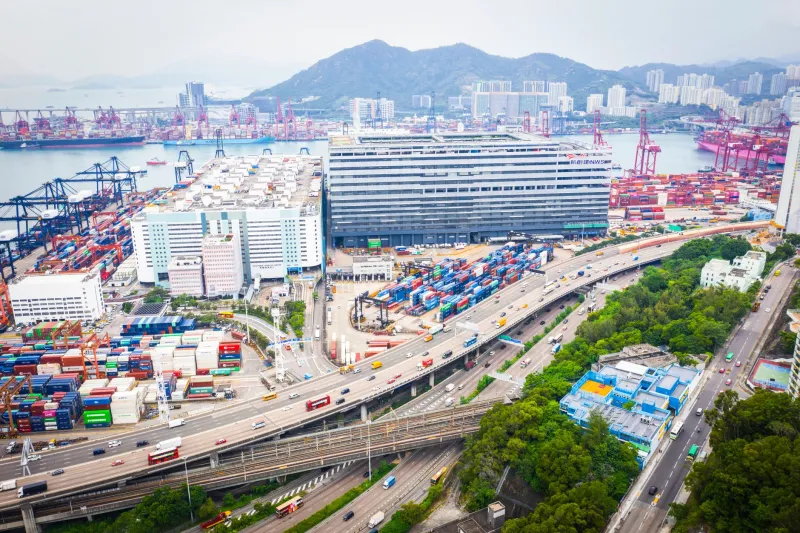
For those watching cross-Pacific business flows closely, the signals have been accumulating for some time. Lease agreements in Hong Kong's Central and Quarry Bay districts. Senior hires in regulatory affairs and government relations. Quiet conversations between relocation specialists and in-house counsel about IP registration frameworks. None of it makes headlines. All of it matters.
Why Singapore and Shanghai Are No Longer Sufficient
For much of the past two decades, Singapore served as the default anchor for US technology companies seeking a politically neutral, English-speaking base from which to manage regional operations. Its legal system, infrastructure, and tax environment remain genuinely competitive. Shanghai, meanwhile, offered unparalleled access to China's manufacturing ecosystem and consumer market.
But the regional calculus has shifted. Singapore, for all its strengths, operates at a distance from the commercial nerve centers of Greater China. Managing supplier relationships, IP licensing negotiations, and regulatory interactions across mainland China from Singapore introduces layers of friction that compound at scale. Shanghai, on the other hand, has grown increasingly complex for US firms navigating data localization requirements, export control obligations, and the operational constraints that have emerged from heightened US-China regulatory scrutiny.
Hong Kong occupies a structurally different position. As a Special Administrative Region, it maintains a common law legal system, an independent judiciary, and a regulatory environment that remains meaningfully distinct from the mainland—while simultaneously offering physical proximity and established commercial channels into Greater China. For a US technology company managing software licensing, hardware supply chains, and data governance simultaneously, that combination is difficult to replicate elsewhere in the region.
The Intellectual Property Dimension
Perhaps no factor weighs more heavily in the relocation calculus than intellectual property. US technology firms operating in Asia manage portfolios of extraordinary complexity—patents, trademarks, trade secrets, software licenses, and proprietary manufacturing processes that must be protected, monetized, and enforced across jurisdictions with wildly divergent IP frameworks.
Hong Kong's legal infrastructure for IP protection is built on common law foundations that US corporate counsel understand intuitively. Enforcement mechanisms are credible. Courts are independent. And critically, Hong Kong-registered IP holding structures can interact with both Western licensing counterparties and mainland Chinese commercial partners in ways that purely offshore structures cannot.
Relocation specialists working with technology clients in the region consistently identify IP governance as the inflection point that tips the decision toward Hong Kong. When a firm's most valuable assets are intangible, the jurisdiction in which those assets are held, managed, and enforced becomes a strategic question—not merely an administrative one.
Talent Retention and the Regional Talent Pool
Beyond regulatory architecture, the talent dimension is reshaping location decisions in ways that spreadsheet-driven site selection often underweights. Hong Kong continues to draw professionals who are genuinely bilingual in Mandarin and English, conversant in both Western business culture and the commercial norms of Greater China, and experienced in navigating the particular ambiguities that define cross-Pacific business relationships.
For US technology companies, this means access to a workforce capable of managing relationships with mainland Chinese partners, government liaisons, and US parent company stakeholders simultaneously—without the translation losses, both linguistic and cultural, that frequently undermine regional operations headquartered elsewhere.
The competition for this talent pool is intensifying. Companies that establish credible, well-resourced presences in Hong Kong are finding themselves better positioned to attract and retain the professionals who make regional operations actually function. Those who treat Hong Kong as a secondary outpost rather than a genuine command center are discovering that the talent follows the commitment.
Geopolitical Calculation in an Era of Competing Frameworks
It would be naive to discuss this migration without acknowledging the geopolitical complexity that surrounds it. Hong Kong's regulatory environment has evolved since 2020, and US companies operating there do so with a clear-eyed awareness of that evolution. The question is not whether complexity exists—it does—but whether Hong Kong's structural advantages are sufficient to justify operating within that complexity.
For a growing number of US technology firms, the answer is yes—provided the operational model is designed accordingly. Companies that have worked with experienced regional consultants to structure their Hong Kong presence with appropriate governance frameworks, clear jurisdictional boundaries, and robust compliance programs are finding that the city's advantages remain accessible and operationally meaningful.
The firms that struggle are those that import a compliance posture designed for a different environment and expect it to function without adaptation. Hong Kong rewards sophisticated structuring. It penalizes assumptions.
What This Means for US Companies Still Deliberating
For US technology executives who have been watching this migration from a distance, the window for deliberate, well-structured repositioning is not unlimited. As more companies establish substantive presences in Hong Kong, the talent market tightens, real estate in preferred districts becomes constrained, and the regulatory relationships that smooth operational entry become more competitive to establish.
The companies moving now are doing so with a specific strategic thesis: that Hong Kong's position as a bridge between Western commercial frameworks and Greater China's economic ecosystem is not a transitional feature, but a durable structural advantage. Whether that thesis proves correct over the long term will depend on factors beyond any single company's control. What is within each company's control is the quality of the strategic preparation that precedes the move.
For US technology firms managing complex regional portfolios, that preparation begins with a clear-eyed assessment of what Hong Kong can and cannot provide—and a consulting relationship with professionals who understand both sides of that equation.