Five Trade Intelligence Lessons From Hong Kong's Sharpest Asia-Pacific Consultants
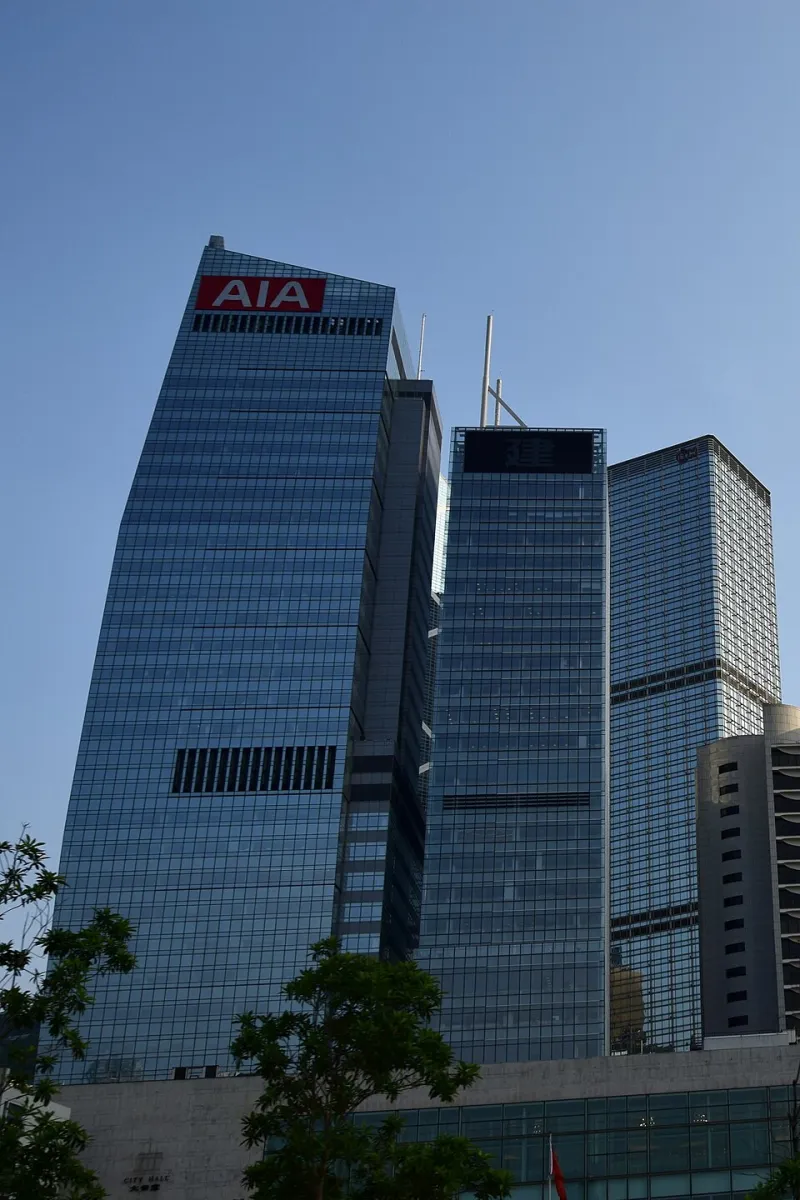
Photo: Ank Kumar, CC BY-SA 4.0, via Wikimedia Commons
There is a particular kind of frustration familiar to anyone who has spent significant time advising US companies on Asia-Pacific trade strategy. It is the frustration of watching otherwise sophisticated business leaders make the same preventable mistakes — not out of negligence, but out of genuine information asymmetry. The intelligence required to navigate Asian supply chains, tariff regimes, and emerging market dynamics effectively is not evenly distributed, and the gap between companies that have it and those that do not is widening.
The consultants and import-export specialists operating out of Hong Kong — a city that functions as both a gateway to mainland China and a neutral vantage point for the broader Asia-Pacific region — are uniquely positioned to see that gap clearly. What follows represents the distilled insight of practitioners who collectively advise dozens of US mid-market companies each year on the decisions that determine whether their Asia-Pacific strategy generates competitive advantage or merely generates complexity.
Insight 1: Tariff Engineering Is Not Tax Evasion — It Is Competent Trade Planning
A surprising number of US mid-market companies approach tariff management as a compliance function rather than a strategic one. They pay whatever duty rate applies to their product classification, treat that cost as fixed, and move on. What they are missing is that tariff outcomes are frequently a function of decisions made well before a shipment crosses a border — decisions about product design, material sourcing, manufacturing location, and country-of-origin documentation.
Hong Kong trade consultants consistently identify misclassification and missed duty preference eligibility as two of the most common and costly errors made by US importers. A product that enters the US under an incorrect Harmonized Tariff Schedule code may be paying duty at a rate several percentage points higher than legally required. Similarly, many US companies importing from countries with which the US maintains free trade agreements or generalized preference programs are failing to claim those benefits because their documentation practices are not set up to support the required origin certification.
Actionable Step: Commission a tariff classification audit on your top 20 imported SKUs. Engage a licensed customs broker or trade attorney with Asia-Pacific expertise to review current HTS classifications and assess eligibility for any applicable duty preference programs. For many mid-market importers, this single exercise recovers six figures in annual duty overpayment.
Insight 2: Supply Chain Diversification Requires a Map, Not Just a Mandate
Since the trade tensions of 2018 and the supply chain disruptions of 2020 through 2022, "diversify away from China" has become a near-universal strategic directive among US corporate boards. The problem, as Hong Kong consultants observe with some regularity, is that the mandate is being executed without the underlying intelligence required to do it well.
Companies are relocating production to Vietnam, India, Bangladesh, and Mexico — often without a rigorous assessment of whether their new supplier base can actually match the quality standards, production capacity, and delivery reliability of the Chinese manufacturers they are moving away from. The result, in many cases, is a supply chain that is nominally more diversified but operationally less resilient.
Hong Kong's position as a regional hub gives its trade consultants visibility into supplier ecosystems across the entire Asia-Pacific corridor. That visibility consistently reveals a more nuanced picture than the binary "China versus everywhere else" framing that dominates US boardroom conversations. Effective diversification, these consultants argue, is about building a portfolio of supply relationships calibrated to product type, volume requirements, and risk tolerance — not about moving production en masse to whatever country is currently attracting the most favorable press coverage.
Actionable Step: Before committing to a new supply geography, conduct a structured supplier capability assessment that evaluates not just unit economics but quality management systems, financial stability, and logistics connectivity. Hong Kong-based sourcing consultants with regional networks can accelerate this process significantly compared to conducting outreach independently.
Insight 3: The Renminbi's Trajectory Belongs in Your Pricing Model
Currency risk management is a discipline that large multinational corporations take seriously and mid-market companies frequently treat as an afterthought. Hong Kong trade consultants observe that many US importers negotiate supplier contracts denominated in US dollars and consider the currency question resolved — without accounting for the fact that their suppliers' cost structures are denominated in renminbi, and that fluctuations in the USD/CNY exchange rate will eventually surface in renegotiated pricing, quality compromises, or supplier attrition.
Beyond the renminbi, the currencies of other major sourcing countries — the Vietnamese dong, the Indian rupee, the Bangladeshi taka — each carry their own volatility profiles that affect the real cost of goods over multi-year sourcing relationships. Companies that model currency scenarios into their landed cost projections make materially better sourcing decisions than those that do not.
Hong Kong, as a global financial center with deep expertise in Asian currency markets, is a natural base for accessing the hedging instruments and financial advisory services that support more sophisticated currency risk management.
Actionable Step: Work with your CFO and a trade finance specialist to model the impact of a 10 percent and 20 percent currency movement on your largest supplier relationships. Use that analysis to determine whether natural hedges, forward contracts, or contract currency provisions are appropriate for your exposure profile.
Insight 4: Regulatory Change in Asia Moves Faster Than Most US Companies' Intelligence Cycles
One of the most consistent observations from Hong Kong trade consultants is that US mid-market companies are operating on a significant information lag when it comes to regulatory developments in Asian markets. Changes to export licensing requirements, environmental compliance standards, labor certification rules, and product safety regulations across mainland China, Southeast Asia, and South Asia are occurring at a pace that most US companies' internal compliance functions are not equipped to track in real time.
The consequences of this lag range from shipment delays and customs holds to supplier audits that reveal non-compliance issues that have been accumulating undetected for months or years. In the most serious cases, companies have faced US Customs and Border Protection enforcement actions related to forced labor compliance — an area where regulatory scrutiny has intensified substantially since the passage of the Uyghur Forced Labor Prevention Act in 2021.
Hong Kong-based consultants and compliance specialists who maintain active networks across the region offer a meaningful intelligence advantage to US companies willing to invest in ongoing advisory relationships rather than point-in-time engagements.
Actionable Step: Establish a quarterly regulatory briefing cadence with a Hong Kong-based trade compliance advisor. At minimum, ensure your supplier contracts include representations and warranties related to labor standards compliance, and that your supply chain mapping extends at least two tiers below your primary suppliers.
Insight 5: Hong Kong Is a Market Entry Platform, Not Just a Logistics Node
Perhaps the most persistently underutilized insight that Hong Kong consultants offer US mid-market companies is this: Hong Kong is not merely a place to move goods through. It is a place from which to build Asia-Pacific market presence.
The city's combination of low corporate tax rates, a freely convertible currency, world-class professional services infrastructure, and preferential access to mainland China under the Closer Economic Partnership Arrangement (CEPA) makes it one of the most commercially attractive bases for US companies looking to establish a meaningful Asia-Pacific footprint. Companies that use Hong Kong purely as a logistics hub are capturing only a fraction of the strategic value available to them.
For US mid-market companies exploring regional expansion — whether into the Greater Bay Area, Southeast Asian markets, or the broader Asia-Pacific consumer base — Hong Kong offers a regulatory environment and professional ecosystem that dramatically lowers the cost and complexity of market entry compared to establishing operations directly in less familiar jurisdictions.
Actionable Step: If Asia-Pacific revenue is a medium-term growth objective for your business, schedule a strategic review with a Hong Kong-based business development consultant to assess whether a Hong Kong entity structure would support your expansion goals more efficiently than your current approach. The conversation costs very little; the missed opportunity, if deferred too long, can cost considerably more.
The Intelligence Gap Is a Choice
The insights above are not secrets closely guarded by a privileged few. They are the working knowledge of experienced professionals who engage with Asia-Pacific trade dynamics every day. What prevents most US mid-market companies from accessing and acting on this intelligence is not availability — it is prioritization.
The companies that are consistently outperforming their peers on Asia-Pacific sourcing, compliance, and market development have made a deliberate decision to invest in the advisory relationships that keep their intelligence current. In a trade environment characterized by regulatory volatility, geopolitical complexity, and rapid market evolution, that investment is not a luxury. It is a competitive necessity.