Gray Zone Navigation: How US Companies Are Restructuring Asia-Pacific Operations to Survive the Export Control Era

For many American companies operating in Asia, the compliance conversation used to be relatively straightforward. Know your counterparties, screen against the Specially Designated Nationals list, and ensure your export documentation was in order. That era is over.
The past several years have seen a fundamental expansion in the scope and complexity of US export controls. The Department of Commerce's Entity List has grown substantially. The Foreign Direct Product Rule has extended US jurisdiction into supply chains that once seemed well outside Washington's reach. And the interplay between Treasury's Office of Foreign Assets Control (OFAC) sanctions programs and Commerce's Export Administration Regulations (EAR) has created a compliance environment where a single structural misjudgment can carry consequences that dwarf the commercial value of the underlying transaction.
For US companies with Asia-Pacific operations, the pressure to restructure is no longer theoretical. It is immediate.
The Expanding Perimeter of US Export Controls
The most significant development in recent years has not been any single restriction, but rather the steady expansion of what constitutes a controlled transaction. Historically, export controls focused on physical goods—defense articles, dual-use technologies, and items with clear military applications. The regulatory perimeter has since expanded to encompass software, cloud-based services, technical data, and even certain categories of investment.
For US companies operating across Asia, this expansion creates a layered compliance challenge. A transaction that appears clean at the point of sale may still trigger regulatory scrutiny if the underlying technology has downstream applications, if the end-user is connected to a restricted entity, or if the transaction routes through a jurisdiction that carries its own set of controls.
The Entity List additions involving Chinese semiconductor firms, telecommunications companies, and AI-focused enterprises have been particularly disruptive. Companies that built supply chain relationships over years—sometimes decades—have found those relationships suddenly reclassified as compliance risks requiring immediate remediation.
Jurisdiction Selection: Where Companies Get It Wrong
One of the most consequential—and most frequently mishandled—decisions a US company makes when entering Asia is jurisdiction selection. Where a company chooses to incorporate, where it holds inventory, where it routes contracts, and where it employs staff all carry regulatory implications that most executives do not fully appreciate at the outset.
A common misstep involves the assumption that structuring operations through a third-country entity automatically creates sufficient distance from restricted jurisdictions. It does not. The Foreign Direct Product Rule, for instance, applies to foreign-made items that are the direct product of US-origin technology or software—regardless of where that item was subsequently processed or through which entity it was sold. A Singapore-registered trading company selling a product manufactured in Malaysia using US-origin chip design software may still be subject to US export controls if the end-user is on a restricted list.
Another frequent error involves conflating geographic presence with jurisdictional exposure. A company may establish operations in a jurisdiction it considers neutral, only to discover that the regulatory analysis turns not on where the company is located, but on where the technology was developed, where the data is processed, or who ultimately controls the enterprise.
These are not edge cases. They represent the kinds of structural vulnerabilities that US enforcement agencies have actively pursued in recent enforcement actions.
Hong Kong's Role in the Compliance Architecture
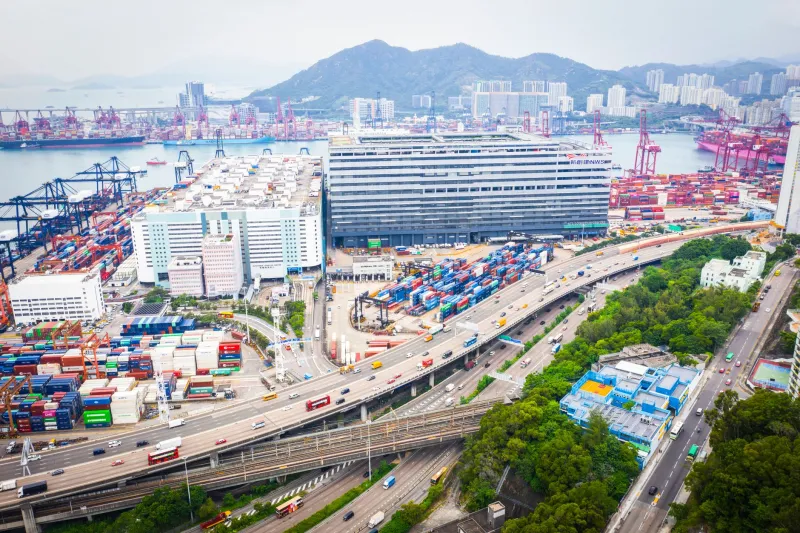
Hong Kong occupies a distinctive position in this landscape—one that requires careful navigation but also offers genuine strategic utility for companies that approach it with proper guidance.
Following the changes to Hong Kong's special trading status under US law, some American companies made the reflexive decision to exit the jurisdiction entirely. In many cases, that decision was premature. Hong Kong remains a sophisticated financial and professional services hub with deep institutional knowledge of cross-border trade, robust legal infrastructure, and a network of advisors who have spent careers understanding the intersection of Chinese commercial relationships and international regulatory requirements.
For US companies seeking to maintain legitimate commercial engagement across the broader Asia-Pacific region—without inadvertently extending that engagement into restricted territory—Hong Kong-based advisory firms provide a form of institutional expertise that is difficult to replicate elsewhere in the region. They understand not only what the regulations say, but how they are interpreted, enforced, and, critically, where the genuine gray zones lie.
This matters because compliance in the export control context is rarely binary. The question is seldom whether a transaction is clearly permitted or clearly prohibited. More often, it falls somewhere in between—requiring a defensible legal position, documented due diligence, and a clear record of good-faith compliance efforts. Experienced advisors help companies build that record before a transaction is executed, not after a subpoena arrives.
Building a Defensible Compliance Framework
For US companies currently restructuring their Asia-Pacific operations, several framework elements have emerged as non-negotiable components of a defensible compliance posture.
End-use and end-user verification must go beyond name-screening. Effective due diligence involves understanding the commercial purpose of a transaction, the identity and affiliations of all parties in the chain, and the likely ultimate destination of the goods, technology, or services involved. Screening tools are necessary but not sufficient.
Technology classification must be conducted with precision and documented thoroughly. Many companies underinvest in the classification process, relying on internal assessments that lack the technical rigor regulators expect. Misclassification—whether intentional or inadvertent—is among the most common triggers for enforcement scrutiny.
Contractual protections need to reflect the current regulatory environment. Distribution agreements, licensing arrangements, and joint venture structures that were drafted several years ago may contain provisions that are no longer adequate or that create unintended compliance exposures. Periodic review is not optional.
Internal escalation protocols must be operational, not aspirational. When a compliance question arises in the field—as it inevitably will—the company needs a clear, documented process for escalating that question, obtaining a timely answer, and recording the decision-making rationale.
The Strategic Imperative
The companies that are navigating this environment most effectively are not those that have retreated from Asia. They are the ones that have invested in building a compliance infrastructure sophisticated enough to allow them to operate confidently within the boundaries that exist.
That investment requires regional expertise. The regulatory frameworks governing Asia-Pacific trade are not static documents that can be mastered once and applied indefinitely. They are living instruments, subject to administrative interpretation, enforcement priority shifts, and geopolitical developments that alter their practical meaning on an ongoing basis.
For US companies with meaningful commercial interests in the Asia-Pacific region, the choice is not between engagement and compliance. It is between structured engagement with proper advisory support and unstructured engagement that accumulates risk invisibly until it does not.
The gray zones are navigable. But they require a guide who knows the terrain.