Slower by Design: Why Deliberate Supply Chain Timelines Are Outpacing Speed-First Sourcing Strategies
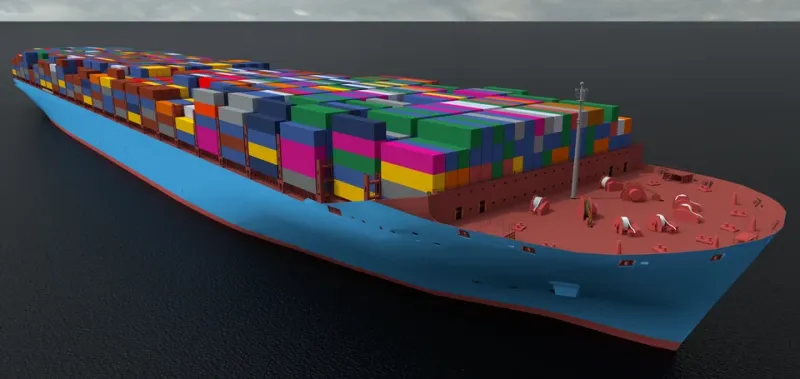
Photo: Wikideas1, CC0, via Wikimedia Commons
For much of the past decade, speed has functioned as the default currency of competitive advantage in US import strategy. The logic appeared self-evident: faster shipping from Asian suppliers meant faster inventory replenishment, quicker response to consumer demand, and a shorter window between capital outlay and revenue realization. Procurement teams optimized relentlessly around lead time reduction. Logistics contracts were renegotiated to shave days off transit schedules. The fastest routes out of Asia's major manufacturing corridors became premium assets.
What that logic failed to account for, however, was the compounding cost of the vulnerabilities it introduced.
Across sectors ranging from consumer electronics to apparel to industrial components, a pattern has emerged among US importers who pursued speed above all else: quality escapes arriving at scale, inventory positions that amplify rather than buffer demand volatility, and cash conversion cycles stretched by the very urgency that was supposed to compress them. The port paradox, as logistics professionals have begun to call it, is the phenomenon in which the fastest supply chains consistently generate the most expensive downstream problems.
The Illusion of Velocity
When a shipment departs a port in Shenzhen or Ningbo and arrives at a US distribution center ahead of schedule, it registers as a win on nearly every conventional logistics dashboard. Transit time metrics improve. Procurement scorecards reflect positively. The procurement manager responsible earns credit for operational efficiency.
What rarely appears on that same dashboard is the quality inspection that was compressed to meet the accelerated timeline, the supplier relationship that was pressured to the point of substituting materials without disclosure, or the inventory buffer that was eliminated because the fast replenishment cycle was assumed to make it redundant.
Each of these omissions carries a cost. Compressed inspection windows increase the probability that non-conforming goods reach US distribution infrastructure—or worse, end up on retail shelves. Supplier pressure without adequate lead time for remediation creates perverse incentives for substitution and concealment. Inventory buffers, dismissed as inefficient in a high-velocity model, become critically absent the moment a single disruption—a port delay, a regulatory hold, a weather event—interrupts the flow.
The result is a supply chain that performs admirably under ideal conditions and fails catastrophically under stress. In today's trade environment, ideal conditions are the exception rather than the rule.
What Recalibration Actually Looks Like
Several US importers operating through Hong Kong-based trade advisory relationships have quietly reversed course on speed-first sourcing over the past several years, and the outcomes warrant serious attention.
One mid-market US home goods retailer, sourcing primarily through Guangdong province, had built its procurement model around the fastest available vessel services from Yantian. When quality complaint rates began climbing and two consecutive peak seasons produced significant overstock positions, the company engaged a Hong Kong-based logistics consultancy to audit the full sourcing cycle.
The audit identified a consistent pattern: inspection protocols had been subordinated to shipping cutoffs, and supplier production schedules were being compressed in ways that increased defect rates at the point of manufacture. The consultancy recommended extending the procurement timeline by three weeks per order cycle—a suggestion that initially met resistance from the company's internal logistics team.
Over the following two order cycles, however, the results were measurable. Defect-related returns fell by a material margin. Inventory positioning improved because the extended timeline allowed for more accurate demand signal integration before orders were finalized. And paradoxically, cash flow improved, because the reduction in returns and markdowns more than offset the carrying cost of the slightly extended cycle.
This is not an isolated case. It reflects a structural insight that experienced Asia-Pacific trade professionals have long understood: supply chain performance is not a function of speed alone. It is a function of the quality of decisions made at each stage of the sourcing process, and quality decisions require adequate time.
The Role of Regional Intelligence
The companies best positioned to execute deliberate, timeline-conscious sourcing strategies share a common characteristic: they maintain substantive relationships with regional specialists who understand the operational realities of Asia's manufacturing and logistics landscape in real time.
Hong Kong's geographic and commercial position makes it a uniquely effective hub for this kind of intelligence. Proximity to mainland Chinese manufacturing centers, combined with a well-established professional services infrastructure, means that advisors operating from Hong Kong can provide US importers with granular visibility into supplier capacity, port congestion patterns, regulatory shifts, and quality risk indicators that are simply not accessible through remote procurement management.
This visibility is what enables deliberate planning. When a US importer knows in advance that a particular supplier is operating at capacity stress, or that a specific port corridor is experiencing systemic delays, the appropriate response is not to push harder on speed—it is to adjust the sourcing plan before the problem materializes.
Rethinking the Competitive Timeline
The broader implication of the port paradox is a necessary reframing of what competitive advantage in supply chain actually means. Speed to market retains its value when it is achieved without compromising the integrity of the sourcing process. But when speed is pursued at the expense of quality control, relationship management, and inventory discipline, it generates a form of competitive disadvantage that is all the more damaging for being invisible on standard performance metrics.
US importers who are genuinely committed to sustainable margin performance are increasingly recognizing that the most valuable asset in their Asia-Pacific supply chain is not the fastest shipping contract—it is the depth of regional knowledge that allows them to plan intelligently, source selectively, and absorb disruption without catastrophic exposure.
The companies pulling ahead are not the ones moving fastest. They are the ones moving most deliberately, supported by the kind of on-the-ground expertise that transforms a supply chain from a cost center into a strategic asset.
For US businesses navigating the complexity of Asia-Pacific sourcing, the competitive edge is no longer measured in transit days. It is measured in the quality of the decisions made long before a shipment ever reaches the dock.