The Logistics Drain: How Flawed Asia-Pacific Sourcing Is Quietly Eroding American Profit Margins
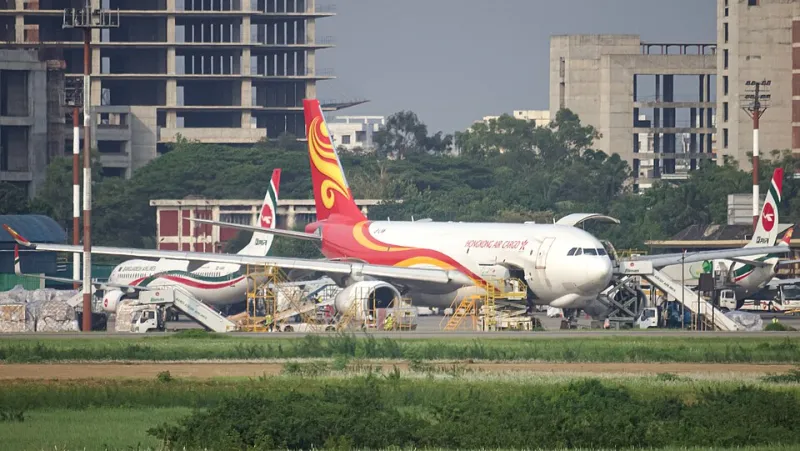
Photo: Md Shaifuzzaman Ayon, CC BY-SA 4.0, via Wikimedia Commons
American businesses collectively move trillions of dollars' worth of goods through Asia-Pacific trade corridors every year. Yet a striking number of those companies operate with supply chain models that were designed for a different era — one with lower fuel costs, more predictable transit times, and far less regulatory complexity. The result is an invisible drain on profitability that rarely appears as a single line item on any balance sheet, but accumulates steadily across freight, inventory, compliance, and vendor management.
Hong Kong's logistics professionals occupy a uniquely informed vantage point. Positioned at the intersection of mainland Chinese manufacturing, Southeast Asian production hubs, and global shipping lanes, they observe firsthand where American supply chains fracture — and where the greatest opportunities for optimization remain untapped.
The Myth of the Lowest-Cost Vendor
One of the most persistent misconceptions among US procurement teams is that the supplier offering the lowest unit price represents the best total value. In practice, this assumption consistently produces the opposite outcome.
Consider a mid-sized American consumer goods company that sourced household products from a factory in Guangdong province based primarily on per-unit cost. On paper, the arrangement appeared favorable. In execution, the company encountered chronic shipment delays stemming from the vendor's inconsistent production scheduling, quality variance that triggered costly returns from major retail partners, and a complete absence of buffer inventory to absorb demand spikes during the holiday season. Over an 18-month period, the savings generated by the low-cost vendor were more than offset by chargebacks, expedited freight premiums, and the management hours consumed by constant vendor communication.
When a Hong Kong-based logistics consultant audited the arrangement, the analysis revealed that a slightly higher-cost supplier with established warehouse capacity in the New Territories, verifiable production timelines, and direct relationships with preferred freight forwarders would have reduced total landed cost by approximately 14 percent.
The lesson is straightforward: total landed cost — encompassing freight, duties, insurance, warehousing, quality control, and the administrative burden of vendor management — is the only meaningful metric for evaluating sourcing decisions.
Where Freight Strategies Fall Apart
Freight optimization is another area where US companies frequently leave significant money on the table. Many organizations default to a single freight forwarder relationship established years ago, without periodically re-evaluating whether that partner's routing, carrier relationships, and technology capabilities remain competitive.
Hong Kong's port infrastructure and its role as a regional transshipment hub offer genuine advantages for companies willing to structure their logistics accordingly. Consolidating smaller shipments from multiple suppliers through a Hong Kong-based freight coordinator, for example, can reduce per-unit shipping costs substantially compared to arranging individual full-container loads from disparate origins. This approach also simplifies customs documentation and creates a single point of accountability for cargo tracking.
Furthermore, companies that have not yet integrated real-time visibility tools into their freight operations are operating with a significant blind spot. Delays identified early — whether due to port congestion, vessel changes, or customs holds — can be managed proactively. The same delays discovered only upon expected delivery create cascading disruptions across retail commitments, production schedules, and cash flow.
Inventory Positioning: The Carrying Cost Problem
A third structural weakness common among US importers is suboptimal inventory positioning. The instinct to hold large safety stock volumes in US-based distribution centers feels prudent, particularly in the post-pandemic environment where stockouts generated severe revenue losses. However, maintaining excessive inventory on US soil carries its own substantial costs: warehouse leasing, labor, insurance, and the very real risk of obsolescence for fashion-sensitive or technology-adjacent product categories.
A more sophisticated model, increasingly adopted by companies working with Hong Kong logistics advisors, involves maintaining a portion of safety stock in bonded warehouse facilities in Hong Kong or Shenzhen. Goods held in bonded storage have not yet cleared customs and therefore do not incur import duties until they enter the destination market. This structure allows companies to hold regional buffer inventory at lower total cost, respond more rapidly to demand signals across multiple markets simultaneously, and defer duty payments to improve working capital positioning.
For a US electronics distributor that implemented this model in partnership with a Hong Kong-based third-party logistics provider, the shift reduced total inventory carrying costs by 11 percent in the first year while improving order fulfillment speed by an average of four days.
Auditing Your Current Operations: A Practical Framework
For US business leaders who suspect their current Asia-Pacific supply chain is underperforming, the following audit framework provides a structured starting point.
Step one is a total landed cost analysis. Pull the last 12 months of procurement data and calculate the true cost of each major product category, inclusive of all freight, duties, quality control, and vendor management expenses. Compare this figure against the original purchase order value to identify where cost amplification is most severe.
Step two involves a vendor scorecard review. Assess each key supplier across delivery reliability, quality consistency, responsiveness, and financial stability. Vendors who score poorly on multiple dimensions represent concentrated risk, regardless of how competitive their unit pricing appears.
Step three is a freight and warehousing network assessment. Map your current routing from origin factories to US distribution points and identify where consolidation opportunities, alternative routing, or bonded storage arrangements could reduce cost or improve lead time reliability.
Step four is a technology gap analysis. Determine whether your current systems provide genuine end-to-end visibility, automated exception alerts, and the data granularity needed to make informed decisions about reorder points and safety stock levels.
The Hong Kong Advantage
What distinguishes Hong Kong as a logistics hub is not simply geography, though its position is undeniably strategic. It is the concentration of expertise — freight forwarders, customs brokers, quality inspection firms, trade finance specialists, and logistics technology providers — operating within a compact, highly connected ecosystem. For US companies seeking to optimize Asia-Pacific supply chains, engaging a Hong Kong-based logistics advisor provides access to this network in a way that is difficult to replicate through relationships built exclusively from American offices.
The companies that will define the next decade of US-Asia trade are not necessarily those with the largest procurement budgets. They are the ones with the discipline to measure what their supply chains actually cost — and the strategic partnerships to do something about it.
SP2S Pro HK works with US businesses at every stage of supply chain assessment and optimization, connecting clients with the right Hong Kong-based logistics professionals to turn audit findings into measurable financial improvement.