Navigating the New Rules: A Strategic Guide for US Companies Operating in the US-Hong Kong Trade Environment

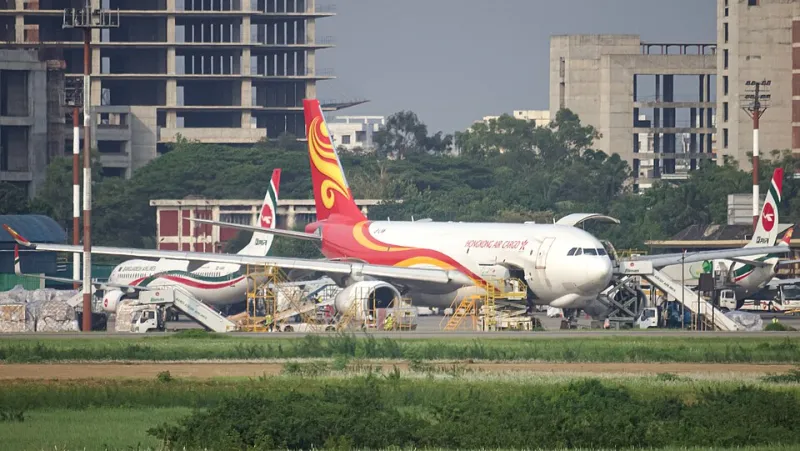
Photo: Unknown authorUnknown author, Public domain, via Wikimedia Commons
Among the many geopolitical and regulatory developments that have reshaped international business over the past several years, few have generated as much confusion — or as much misplaced caution — among American executives as the evolving status of Hong Kong's regulatory and trade environment. Policy changes, new compliance requirements, and shifting diplomatic signals have prompted some US companies to scale back engagement prematurely, often without a full understanding of what the actual risk exposure entails or what mitigation options remain available.
This is precisely the kind of environment in which informed advisory counsel pays for itself many times over. The companies that are currently gaining competitive ground in Asia-Pacific markets are not necessarily those with the most conservative risk postures. They are the ones with the clearest picture of what the rules actually require — and the most capable partners helping them structure their operations accordingly.
Understanding the Tariff Landscape
The most immediate compliance concern for many US importers and exporters involves tariffs. Following changes to Hong Kong's status under US trade law — specifically the suspension of special trade treatment that had historically distinguished Hong Kong-origin goods from mainland Chinese goods — American businesses must now apply greater scrutiny to origin determinations when sourcing through Hong Kong channels.
This does not mean Hong Kong has ceased to function as a viable trade gateway. It means the rules of engagement have changed, and companies that have not updated their classification and origin documentation practices are carrying unnecessary exposure.
For goods that are genuinely manufactured or substantially transformed in Hong Kong — and the threshold for "substantial transformation" under US Customs and Border Protection rules is specific and fact-intensive — proper origin documentation continues to support legitimate trade treatment. The risk lies in companies that have not revisited their origin determinations since the regulatory environment shifted, or that rely on vendor representations without independent verification.
A Hong Kong-based trade compliance consultant brings a material advantage here: proximity to the production and sourcing environment means they can conduct on-the-ground verification that US-based compliance teams simply cannot replicate remotely. The cost of a proper origin audit is a fraction of the potential exposure from a Customs enforcement action.
Corporate Structuring in a Changed Environment
Beyond tariffs, US companies with operational presence in Hong Kong — whether through representative offices, joint ventures, or wholly owned subsidiaries — are navigating a more complex corporate structuring environment than existed a decade ago.
Several considerations have risen in prominence. First, the interplay between Hong Kong's legal framework, which continues to operate under a common law system with meaningful independence from mainland Chinese civil law, and the expanding scope of mainland regulatory reach creates structuring questions that require careful legal analysis. For US companies, understanding where their Hong Kong entities sit within this framework — and how that positioning affects everything from dispute resolution to asset protection — is no longer optional.
Second, beneficial ownership disclosure requirements have expanded globally, and Hong Kong is not exempt from this trend. US companies operating through Hong Kong structures should ensure their corporate governance documentation reflects current requirements, both under Hong Kong law and under US reporting obligations such as the Corporate Transparency Act, which imposes its own beneficial ownership disclosure requirements on US entities regardless of where their operational subsidiaries are located.
Third, for companies considering new market entry or restructuring existing arrangements, the choice of corporate vehicle — branch office, subsidiary, partnership, or other structure — carries different implications for tax treaty access, liability exposure, and operational flexibility. These decisions benefit significantly from coordinated advice between US counsel and Hong Kong-based corporate advisors who understand both sides of the equation.
Data Privacy: An Underappreciated Compliance Dimension
Data privacy is an area where many US businesses have not yet caught up with the compliance obligations that their Asia-Pacific operations generate. Hong Kong maintains its own Personal Data (Privacy) Ordinance, which governs the collection, use, and transfer of personal data and carries enforcement mechanisms that have become more actively applied in recent years.
For US companies that collect customer or employee data in connection with Hong Kong operations — including through digital platforms, e-commerce transactions, or HR systems — the question of how that data is stored, processed, and transferred across borders is a live compliance issue. This is particularly relevant for companies that route data through centralized US-based systems, as cross-border data transfers may trigger obligations under Hong Kong law that require specific contractual protections or data processing agreements.
The intersection of Hong Kong data privacy requirements with US obligations — including sector-specific rules for financial services and healthcare, as well as state-level privacy laws such as the California Consumer Privacy Act — creates a multi-layered compliance environment that is best managed through a coordinated framework rather than a jurisdiction-by-jurisdiction patchwork approach.
Risk Mitigation Without Market Retreat
The framing of Hong Kong regulatory complexity as a reason to exit or avoid the market reflects a misunderstanding of how experienced operators approach geopolitical and regulatory risk. In virtually every major market — the European Union, mainland China, the Middle East, Latin America — regulatory complexity is a permanent feature of the operating environment, not a temporary condition that resolves itself.
The companies that manage this complexity most effectively share several characteristics. They invest in current, locally grounded advisory relationships rather than relying solely on guidance developed from distant headquarters. They conduct regular compliance reviews rather than treating regulatory assessment as a one-time exercise. And they distinguish between risks that are genuinely material to their specific operations and risks that are theoretically present but practically remote given the nature of their business activities.
For a US financial services firm with a representative office in Hong Kong, the compliance priorities look very different from those facing a US consumer goods company that uses Hong Kong as a logistics and sourcing hub. Generic risk assessments that treat all US-Hong Kong business activity as equivalent produce neither accurate analysis nor useful guidance.
The Value of a Trusted Regional Advisor
What US business leaders most consistently report needing — and most frequently lack — is a single, coherent source of advisory judgment that integrates trade compliance, corporate structuring, and operational risk into a coordinated strategic view. The fragmented approach of engaging separate legal, tax, and logistics advisors without a coordinating function produces incomplete analysis and missed connections between issues that are, in practice, deeply interrelated.
Hong Kong-based professional services platforms that combine regional expertise with a clear understanding of US business priorities are positioned to fill exactly this gap. The regulatory environment will continue to evolve — that much is certain. The question for US business leaders is whether they are positioned to respond to those changes with agility and informed judgment, or whether they will continue to manage complexity reactively.
SP2S Pro HK exists to provide US businesses with the coordinated regional expertise that turns regulatory complexity from a source of exposure into a manageable — and ultimately navigable — dimension of doing business in one of Asia's most commercially consequential markets.