Flip the Map: Why Leading US Brands Are Building Their Supply Chains From Asia Outward
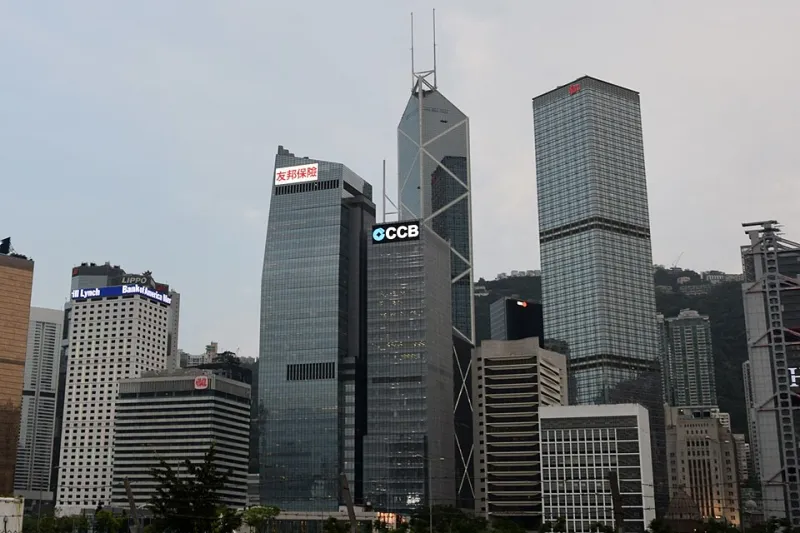
Photo: Ank Kumar, CC BY-SA 4.0, via Wikimedia Commons
The Old Model Is Showing Its Age
For decades, the standard American playbook for international sourcing followed a familiar sequence: define the product domestically, identify overseas manufacturers through brokers or trade directories, negotiate pricing, and then manage the resulting logistics chain from afar. Hong Kong, when it appeared at all in this framework, was typically treated as a transit point—a place where containers changed hands before continuing their journey to West Coast ports.
That model served its purpose when global trade was slower, regulatory complexity was lower, and the competitive premium on speed was less acute. Today, none of those conditions hold. US brands competing in fast-moving consumer categories—apparel, electronics, health products, specialty retail—are discovering that a supply chain designed around American convenience rather than Asian operational reality is a structural liability.
The companies pulling ahead are not simply negotiating harder with existing suppliers. They are rebuilding the architecture of how they source, and they are starting that rebuild in Hong Kong.
What "Asia-First" Actually Means in Practice
The Asia-first model is not about relocating headquarters or abandoning domestic operations. It is a strategic reorientation that places the sourcing and coordination function at the center of the Asian manufacturing ecosystem rather than at its periphery.
In practical terms, this means establishing a permanent presence—or retaining a dedicated consulting partner—in Hong Kong to serve as the operational intelligence hub for all regional sourcing activity. From that position, a company gains direct visibility into manufacturer capacity across mainland China, Vietnam, Malaysia, and the broader ASEAN corridor. It gains access to real-time market intelligence on raw material pricing, factory compliance status, and lead time variability. And it gains proximity to the financial and legal infrastructure that Hong Kong uniquely provides: a common law legal system, a freely convertible currency, and a regulatory environment built explicitly for international commerce.
The inversion is conceptual as much as logistical. Rather than asking "how do we get product from Asia to our customers," Asia-first companies ask "how do we position ourselves within Asia to serve our customers better than competitors who are operating from the outside looking in."
Speed-to-Market as a Competitive Weapon
One of the most tangible advantages of the Asia-first structure is its impact on product velocity. Consider the difference between a brand that communicates with suppliers through a domestic sourcing manager operating across a 12-to-15-hour time zone gap, versus a brand whose Hong Kong-based team conducts factory visits, resolves quality issues, and approves production samples within the same business day.
The latter brand does not just move faster in isolation—it compounds that speed advantage across every product cycle. A two-week reduction in sample approval time, repeated across six product launches per year, translates into meaningful calendar advantages at retail. In categories where shelf relevance is measured in weeks rather than seasons, that compression is not incremental—it is transformative.
Hong Kong's geographic position amplifies this further. Sitting within a three-to-four-hour flight radius of virtually every major manufacturing center in Asia, it functions as a natural operations base for teams that need to move between supplier facilities without the logistical friction of longer-haul travel.
Cost Optimization Beyond the Unit Price
American brands that fixate on factory gate pricing often underestimate the full cost structure of a poorly coordinated supply chain. Rework charges, air freight premiums incurred to recover from delayed sea shipments, customs penalties arising from documentation errors, and the carrying cost of excess safety stock maintained to buffer against unreliable lead times—these expenses rarely appear on the original sourcing spreadsheet, but they accumulate with considerable force.
Asia-first companies, operating through Hong Kong-based teams with deep regional relationships, tend to achieve cost discipline at a systemic level rather than through unit-price negotiation alone. Supplier relationships managed in-market produce better allocation priority during periods of capacity constraint. Quality oversight conducted on the ground reduces the frequency and severity of defect-related losses. And access to Hong Kong's established freight forwarding and customs brokerage ecosystem creates efficiencies in the outbound logistics chain that are difficult to replicate from a US-based operations desk.
The cost advantage, in other words, is structural rather than transactional.
Regulatory Compliance as a Strategic Asset
The compliance dimension of Asia-sourced supply chains has grown substantially more complex in recent years. Country-of-origin determinations, forced labor certification requirements under the Uyghur Forced Labor Prevention Act, and evolving documentation standards for customs entry all demand a level of supplier-level diligence that cannot be performed effectively from a distance.
Hong Kong-based consultants and trade professionals bring a critical advantage here: they operate within the regional supply base on an ongoing basis, not merely during scheduled audits. That continuous presence enables them to identify compliance risks at the supplier level before those risks become enforcement events at the US port of entry.
For brands that have invested in building a market position in the United States, the reputational and financial exposure associated with a supply chain compliance failure is substantial. The Asia-first model treats compliance infrastructure as a front-end investment rather than a reactive cost—a distinction that separates companies managing risk from those absorbing it.
Rethinking the Default Assumption
The conventional wisdom that supply chains should be managed from the market they serve made sense in an era when sourcing complexity was lower and competitive differentiation was achieved primarily through product and marketing. The current environment has changed the terms of that equation.
US brands that continue to treat Asia as a vendor pool to be managed from afar are operating with a structural disadvantage relative to competitors who have embedded themselves in the region's commercial infrastructure. Hong Kong, with its unmatched combination of geographic centrality, financial sophistication, legal clarity, and business connectivity, remains the most logical anchor point for that embedded presence.
The question for American brands is not whether an Asia-first approach makes strategic sense. The evidence increasingly suggests that it does. The more pressing question is how long a company can afford to defer the structural changes that would bring its sourcing model into alignment with the competitive realities of modern global trade.
For businesses ready to engage that question seriously, the expertise to architect and execute that transition is available—and it is headquartered precisely where the work needs to happen.