The Middleman Myth: What US Importers Lose When They Cut Hong Kong Out of the Supply Chain
There is a particular confidence that comes with signing a factory-direct contract. For many US procurement managers, it feels like the smartest move in the room—no commissions, no intermediary markups, no third-party interference between buyer and manufacturer. The logic is intuitive. The outcomes, however, are frequently the opposite of what was intended.
The assumption that removing the Hong Kong intermediary layer reduces total acquisition cost is one of the most persistent and expensive misconceptions in cross-Pacific trade. It conflates line-item pricing with total cost of ownership, and it misunderstands the structural role that regional trade specialists play in a supply chain that spans two of the world's most complex commercial environments.
What the Invoice Doesn't Show
When a US importer negotiates directly with a manufacturer in mainland China, Vietnam, or elsewhere in Asia, the unit price on the purchase order is only one component of what that relationship will ultimately cost. Regional intermediaries—particularly those operating through Hong Kong, which functions as Asia's foremost international trade hub—absorb a substantial portfolio of functions that most US buyers neither anticipate nor price into their direct-sourcing models.
Consider quality negotiation leverage. A Hong Kong-based trade specialist maintains ongoing commercial relationships with dozens of manufacturers across multiple product categories. That relationship history creates leverage that a first-time or low-volume direct buyer simply does not possess. When defect rates creep up or specification drift occurs—and it does, routinely—the specialist has both the standing and the local presence to enforce remediation. The US importer negotiating directly from across twelve time zones has neither.
Currency exposure represents a second category of hidden cost. Transactions denominated in US dollars may appear straightforward, but the underlying pricing from Asian manufacturers is often calculated against local currency benchmarks that fluctuate meaningfully over a production cycle. Hong Kong intermediaries with established treasury relationships and hedging expertise manage this exposure as a matter of routine practice. US buyers operating without that layer frequently absorb currency-driven cost variances that never appear in any post-mortem analysis—because no one was tracking them.
The Compliance Overhead Nobody Budgets For
US importers face an increasingly dense regulatory environment when sourcing from Asia. Customs compliance, country-of-origin documentation, forced labor due diligence under the Uyghur Forced Labor Prevention Act, and product safety certifications for the US market each require specific expertise and active management. These are not one-time administrative tasks. They are continuous obligations that evolve with regulatory updates and supply chain changes.
Hong Kong-based trade intermediaries integrate compliance review into their standard service architecture. For a US importer managing a direct factory relationship, that same compliance work must be sourced, staffed, and supervised independently—at costs that are rarely anticipated at the outset of a direct-sourcing initiative.
A regional electronics distributor based in the Pacific Northwest learned this precisely the hard way after transitioning a core product line to a direct factory relationship in Guangdong Province. Within eighteen months, the company faced a customs hold due to inadequate country-of-origin documentation, a quality dispute that required an in-person factory audit, and a delayed shipment that resulted in a retail penalty clause being triggered. The cumulative cost of resolving those three incidents exceeded two years of the intermediary fees the company had eliminated. The unit price savings had evaporated entirely.
Logistics Coordination as a Value Center
Logistics in cross-Pacific trade is not a commodity function. It is a discipline that requires active management, regional relationships, and the capacity to respond to disruptions across multiple jurisdictions and carrier networks. Hong Kong intermediaries who have built logistics coordination into their service model operate with a set of carrier relationships, freight booking windows, and port-level contacts that no US-based procurement team can replicate from a distance.
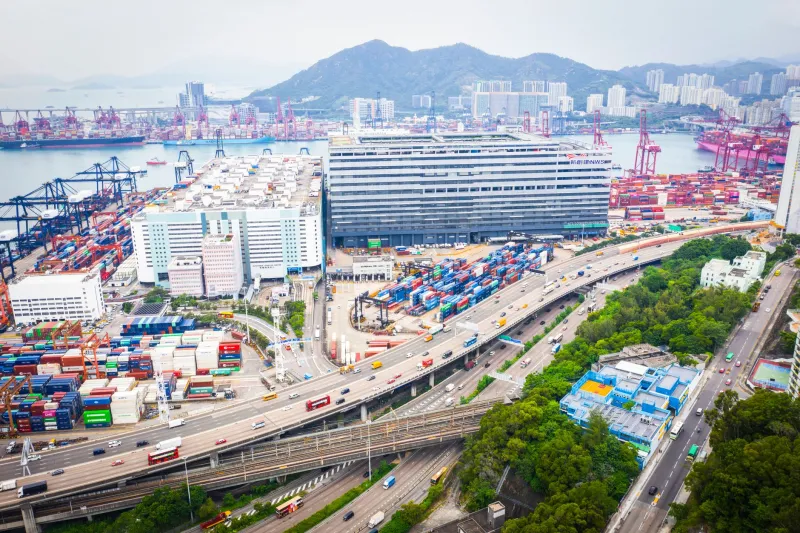
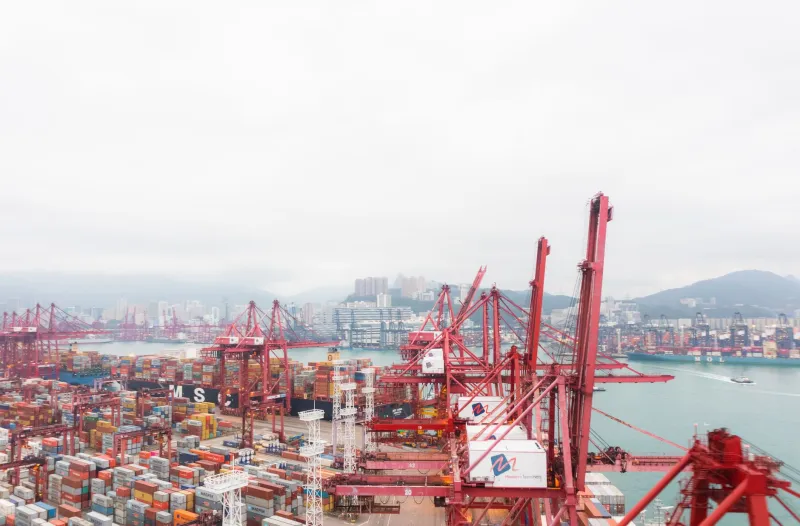
When port congestion spikes at Yantian or Nansha—as it has repeatedly in recent years—a Hong Kong-based specialist with established carrier relationships can reroute cargo, secure alternative booking windows, or coordinate transshipment through Hong Kong's own port infrastructure. A US importer managing a direct factory relationship is, in those moments, entirely dependent on whatever capacity the factory's logistics team can access. That dependency has a price, and it is not reflected in the original unit cost.
Freight rate volatility compounds this dynamic. The difference between a spot rate and a contracted rate during a capacity crunch can be substantial. Regional intermediaries who consolidate volume across multiple clients maintain contracted rate access that individual US importers cannot negotiate independently. The savings from that rate differential alone frequently offset a meaningful portion of intermediary fees.
Relationship Capital and Its Commercial Value
Perhaps the most underappreciated asset that Hong Kong trade intermediaries bring to a US importer's supply chain is relationship capital—the accumulated trust, communication credibility, and cultural fluency that governs how manufacturers respond to requests, complaints, and urgent production changes.
Asian manufacturing relationships operate within a set of social and commercial norms that differ materially from US business culture. Requests framed in ways that seem direct and efficient from an American perspective can register as abrupt or disrespectful in a Cantonese or Mandarin business context, subtly undermining the manufacturer's willingness to prioritize a client's orders or accommodate short-notice changes. Hong Kong intermediaries navigate that cultural interface continuously and professionally. The value of that navigation—in production scheduling priority, in defect resolution speed, in the willingness of a factory to absorb a cost overrun rather than pass it to the buyer—is real, measurable, and routinely invisible until it disappears.
Recalculating the Equation
The decision to work with or without a Hong Kong-based trade intermediary should never be made on the basis of line-item commission rates alone. The correct framework is total cost of ownership: the aggregate of unit pricing, compliance overhead, logistics coordination costs, currency exposure, quality management expenses, and the relationship capital required to sustain a productive manufacturing partnership across a significant cultural and geographic distance.
When that calculation is performed honestly, the intermediary layer rarely looks like a cost. It looks like infrastructure—the kind of infrastructure that US companies building serious Asia-Pacific supply chains cannot afford to leave out of the equation.
For US importers currently operating without regional representation in Hong Kong, the relevant question is not what the intermediary costs. It is what the absence of one has already cost—and what it will cost next.