Ahead of the Curve: How Real-Time Tariff Intelligence Keeps US Importers One Step Ahead of Asia's Shifting Trade Landscape
Photo: Joe Haupt from USA, CC BY-SA 2.0, via Wikimedia Commons
For many US importers, trade policy changes arrive like weather events—sudden, disruptive, and expensive. A tariff adjustment in Vietnam, a new certification requirement in China, a revised preferential trade clause affecting goods transiting through Hong Kong: each of these developments can cascade through a supply chain in ways that take weeks to untangle and months to recover from financially. The unsettling reality is that most American companies learn about these shifts after the fact, when invoices have already been issued and shipments are already in motion.
That reactive posture is increasingly untenable. In today's compressed trade environment, where margins are thin and lead times are tighter than ever, the gap between knowing early and knowing late can represent millions of dollars in avoidable costs.
Why the Intelligence Gap Exists
The challenge is structural, not incidental. US-based procurement and compliance teams are generally well-versed in domestic regulatory frameworks, but Asia-Pacific trade policy operates through a different set of institutions, communication channels, and cultural norms. Regulatory announcements may be published in Mandarin, Cantonese, or Vietnamese before any English-language summary becomes available. Industry associations in the region often circulate informal advisories weeks before formal government notices are issued. And in many cases, the most consequential intelligence never appears in official channels at all—it travels through professional networks, trade associations, and government liaisons that require years of relationship-building to access.
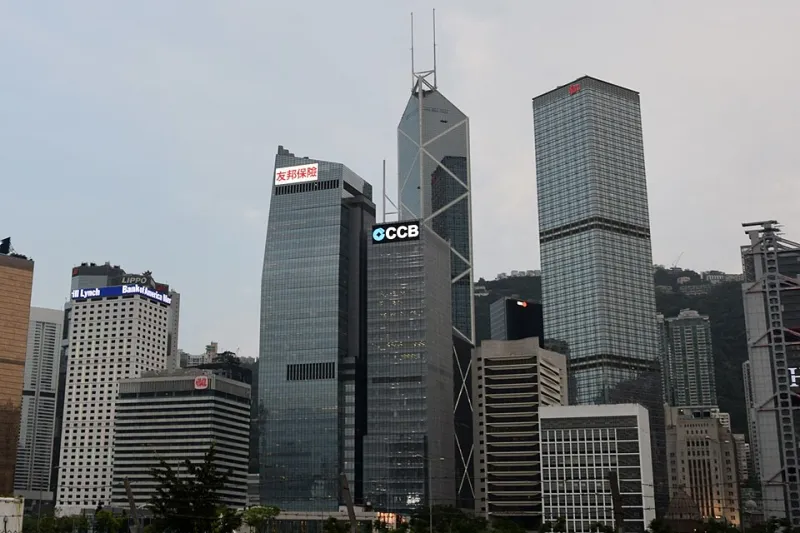
This is precisely where Hong Kong's position becomes strategically valuable for US businesses. As a longstanding hub at the intersection of Western commercial practice and Asian regulatory reality, Hong Kong hosts a dense ecosystem of trade consultants, customs brokers, and policy analysts who maintain active relationships with regulatory bodies across the region. These professionals are not simply monitoring news feeds—they are embedded in the information architecture of Asian trade.
What Proprietary Intelligence Actually Looks Like
The term "intelligence" can sound abstract, but in practice it refers to a specific set of data sources and monitoring activities that most US companies do not have the infrastructure to replicate independently.
Consider how a Hong Kong-based trade advisory team might approach tariff monitoring for a US client sourcing electronics components from multiple Asian markets. The team would typically maintain subscriptions to government gazette services across five or more jurisdictions, participate in regional chambers of commerce where policy consultations are previewed before public release, and employ local analysts who can interpret regulatory language in context—distinguishing, for example, between a procedural amendment and a substantive policy shift that will affect landed costs.
Beyond formal data sources, experienced consultants cultivate relationships with customs officials, freight forwarders, and port authorities who frequently have advance visibility into enforcement priorities and classification changes. This network-based intelligence is difficult to quantify but often the most actionable, providing lead times of weeks or even months before a change becomes broadly known.
Case Illustration: The Textile Reclassification That Wasn't a Surprise
In 2022, a mid-sized US apparel retailer sourcing from Bangladesh and Cambodia faced a significant disruption when preferential duty rates under the Generalized System of Preferences were suspended for specific textile categories. Competitors who had not anticipated the change scrambled to renegotiate supplier contracts and absorb unexpected duty increases.
The retailer's Hong Kong-based trade consultant, however, had flagged the possibility of this suspension six weeks earlier, based on signals from a regional trade association and informal communications from a government liaison in Phnom Penh. That six-week window allowed the client to adjust purchase orders, accelerate specific shipments ahead of the effective date, and begin qualifying an alternative supplier in a jurisdiction with unaffected duty status. The financial impact was contained; the operational disruption was minimal.
This kind of outcome is not exceptional among companies that invest in professional trade intelligence. It is, in fact, the baseline expectation.
The Cost of Waiting for the Federal Register
US importers who rely primarily on domestic regulatory sources—Federal Register notices, US Customs and Border Protection bulletins, or trade association newsletters—are inherently operating on a delayed information cycle. By the time a policy change affecting Asian sourcing countries is formally reflected in US government publications, the effective date may already be approaching or, in some cases, have passed.
The financial stakes are considerable. A tariff increase of even two to three percentage points on a high-volume import category can translate to hundreds of thousands of dollars in additional annual costs for a mid-market importer. For larger enterprises, the exposure is proportionally greater. More significantly, the secondary costs—supply chain reconfiguration, supplier renegotiation, inventory adjustments—often exceed the direct duty impact.
Building an Intelligence Advantage: Practical Steps for US Companies
For US businesses that have not yet formalized their approach to Asian trade intelligence, the path forward does not require building an in-house capability from scratch. Engaging a qualified Hong Kong-based consulting partner provides immediate access to the networks, data subscriptions, and analytical expertise that would take years to develop independently.
When evaluating potential advisory partners, US importers should look for firms with demonstrated presence in the specific markets where they source, verifiable relationships with regional trade bodies, and a track record of providing actionable intelligence rather than retrospective analysis. The distinction matters: a consultant who can explain why a tariff changed after the fact is useful; one who can anticipate the change before it happens is valuable.
Companies should also consider the structure of their intelligence-sharing arrangements. The most effective partnerships involve regular briefings—weekly or bi-weekly at minimum—rather than reactive consultations triggered only when a problem has already materialized. Proactive communication rhythms allow for strategic adjustments rather than emergency responses.
The Competitive Dimension
It is worth noting that tariff intelligence is not merely a risk management tool—it is a source of competitive advantage. US companies with superior advance visibility into regulatory changes can make faster sourcing decisions, lock in favorable supplier terms before market conditions shift, and position themselves to absorb or pass through cost changes more effectively than competitors who are still catching up.
In an environment where trade policy across Asia continues to evolve rapidly—driven by geopolitical realignments, bilateral negotiations, and domestic economic pressures in sourcing countries—the ability to anticipate rather than react is becoming a defining characteristic of supply chain leadership.
For US importers serious about protecting their margins and accelerating their strategic decision-making, the question is no longer whether to invest in Asian trade intelligence. It is how quickly they can build the partnerships that make that intelligence accessible.